Wednesday, January 22, 2014

Two Hand Casting "The Lift"

The start of any, from the dangle, two hand cast is to make sure that all slack is out of the system. Slack that must be eliminated by using part of the lift is a delayed transfer of energy from body to rod to line. Slack in the lift can even become slack at the beginning of the sweep. The first upward movement, or lift, is used to clear line from the surface tension to make our next move easier and afford the ability to make a well placed and properly shaped anchor set.  A rule of thumb in tip height to a lift would be to clear half the line from the water.  A proper lift will find the entire rod moving upward and not just the tip.  A hinge lift is ineffective and will cause added slack.

The shotgun lift is that basic move to get things fluid. Other lifts like crescent, cut and spiral are more dynamic and can be effective in situations that need a bit more energy or a change of position of the line. The shotgun lift is made with a slow, S-L-O-W, short, perpendicular rod movement up with an appropriate slow tempo.  Speed is not necessary.  There needs to be variation in the power, tempo and height of the lift determined by river condition. A flat mid section of a pool might require less power on the lift that say the faster moving tail out.  A key factor about any lift is that there is no abrupt movement.  Between lift and sweep there is no pause.  We call them using two words but they are one movement.  The concept of power on and power off with tempo is always in effect.

The key to any well executed lift is the judgement of power required to make the line free to move upward and transition to the sweep without a stop. This is where power to tempo transforms to the dramatic power at the start of your sweep. Use your lift wisely and concentrate on the ability to get your casting to feel continuous from it's very first movement till you follow through and make the presentation back to the water.


Saturday, December 14, 2013

Two Hand Casting "The Stop", Or Not To Stop. There Isn't A Question.......

In our two hand casting quest for that perfect loop, or "true loop" as described by Way Yin, there is one aspect that controls the front shape of the loop that is without question. It is called "The Stop". I now call it the "The Almost Stop" and mostly use a much more modern version called "Pull Rod Straight".. Given are the elements of straight tip path and smooth continuous acceleration and we come to the end of each forward stroke with either an abrupt stop or just a stopping of the forward translation  movement of the top hand  . Inertia of the rod and line weight will not allow us to stop like hitting a wall. But there are things we can do to make the almost stop as close to dead stop as possible.  There is also a way to use the none abrupt stop to make tight loops.  Yes, even tighter loops than abrupt stopping.  I know we have all been trained in the formation of making loops with abrupt stops.  For now, let's consider that there is more than one way to form loops..

First let's understand the physics and nature of the hard stop made by the muscles in our upper arm. There is such a thing as the most effective and strongest position of each muscle in our body. For the upper arm it comes with a bend at the elbow and residing close in to our upper body. What does this tell us about the use of our upper grip and the stop? It tells us that if we extend our elbow far forward and open we are increasingly at a disadvantage in the strength required to make the abrupt stop.

In my teaching a constant fault I see is the extension of the upper grip arm too far forward. No matter abrupt or non stop methods will have the upper arm in a bent position.  We blame this over extension on Singlehandcastitis and the muscle memory of many casting years.  This is one way to make a cast but not the only way.  Take Lefty Kreh for an example in relation to a single hand casting stroke. His forward stroke starts well back and then slightly rotates to a stop with the elbow very close to the body. He uses body rotation and forward movement as part of the driving power source.  He likes to keep this tight to the core position as it will help the arm muscles to stay flexed and not extended. He also believes that this strong tight position will keep us casting longer and free of injury. We know that the extension of these muscles is the weakest position they can be placed.

You need only watch Goran Andersson cast to understand this high stop with flexed arm. The entire purpose of Scandinavian style casting is distance with the least amount of effort. Scandi casting has some of the principles of the non stop casting technique.  I can well understand the thinking that extending the length of a stroke by the extension of our upper arm seems logical. But if the almost abrupt stop causing a tight efficient front shape of a loop is the goal then a stop that takes longer than an almost stop is not the answer.

The difference between the stop and forced over the tip style and the "pull rod straight" style is most manifested in the shape of the loop created.  When we abruptly stop a fully loaded rod it will cause the line to move over the tip.  The tip will move forward and then bend down toward the horizon.  Depending on the flex and action of the rod it can bend quite a bit.  This is called counter flex.  Counter flex is necessary. When the rod is stopped in this way and counter flex happens it drives the rod leg of the loop down and causes a shock dimple shape to the loop.  Not the worst thing to happen and is a natural effect of counter flex.

"Pull Rod Straight" is an Al Buhr creation that in my practice has been changing the shape of my loops.  Al told me about this as a means to help reduce early and excessive rotation between top and bottom hands. This is the cause of bulbous or even tailing loops by causing the rod line leg to dip below a straight tip path.

Here are the steps for using the Pull Rod Straight technique.  Imagine that you are in a perfect rounded up to key position  with both hand about to make the forward stroke.  Abrupt stop has us using some sort of ratio of power between top and bottom hands that is usually applied in the last part of the forward stroke.  We have all seen this as a 50/50 or 40/60.    Depends on style but the concept is the same.  The factor in abrupt stop is that the top and bottom hands are making the transition from the rod facing backward and bent to facing forward and un bending making the transition at the same time.  In "Pull Rod Straight", both top and bottom hands move forward together during the stroke.  The rod is being heavily butt loaded as both the butt of the rod is pushed forward in unison with the top hand grip.  When the forward movement is far enough to make that strong fulcrum position the top hand stops moving forward.  A firm hold is not necessary on the rod.  In fact, no grip is necessary but having the top grip laying in the heel of the hand is all that is needed.  We have also seen this as making a circle with thumb and index finger.  The circle keeps the rod in position but is is still the heel that receives the fulcrum pressure point.  No forced push and squeezing.  The top grip is rocking on the heel of the hand.  The next movement is made without pause and the bottom hand, that can be as short as two inches is made pulling the rod toward the non dominant hip pocket. Core strength of abdominal, chest and arm muscles are in play and the top hand acts only as a fulcrum.  A fulcrum that is firm but not pushed for power.  A fulcrum that is now directed by the bottom hand pull and moves forward and down clearing the tip and allows the line to pass over during the "Pull Rod Straight".  Tight and abrupt causes counter flex and rod vibration.   "Pull Rod Straight" allows the tip of the rod to naturally bend downward without excessive counter flex.

 I found the easiest way to feel the difference in these two casting styles was through pantomime.  Slowing down the movements with full control and doing them over and over again.  I offer the above as options of choice.  There are no bad loops.  Gordy Hill uses a tailing loop while Snook fishing to get his fly under the mangroves.  My point is that our ability to choose is what counts.

William


Tuesday, December 3, 2013

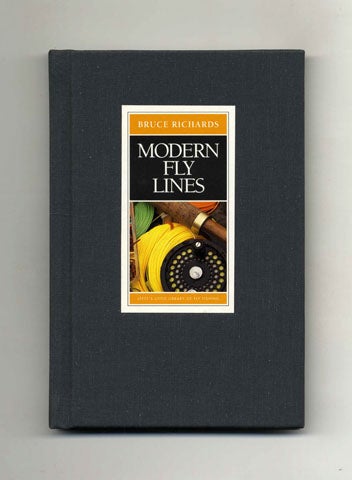
Modern Fly Lines by Bruce Richards

I just finished reading this great book cover to cover.  This is a must read that will take the mystery out of your next line choice. Learning why is the key......

Starting with the composition of lines to their final destination in casting can be a tricky part of fly fishing.  Having the knowledge to know what style of line is going to offer the greatest control in a certain angling situation is paramount.  It all starts with the understanding of how energy is transmitted from the tip of your rod to the last point of dissipation.

Bruce Richards offers you this knowledge in a well written and illustrated gem.  A wonderful read for anglers of all abilities.

A must read if you want to understand how to crack that whip!

Thursday, November 7, 2013

Berry Brook Berry Brook Berry Brook Berry Brook Berry Brook Berry Brook Berry Brook Berry Brook Berry Brook


That's right, Berry @#$#@#$#@ Brook. How many times have you been asked about Berry Brook? Do those monster brown trout really exist or are they just a figment of the State of New Hampshire's warped mind.

I'm happy to say that they do exist.

In the past twelve years. of going to Berry Brook many, many times, I have seen a total of five fish. And I'm not talking about the little stockers. I have hooked two of the five and landed none of the two.

Next time you are looking for a bit of humility give this a try. Stand on the bridge all ready to cast but don't. Think of yourself as a deer hunter. Quite, not moving and waiting to see your quarry. You wouldn't randomly be shooting arrows. Four hours will not fly by as quickly as when we are casting. These fish are so spooky that the mere action of waving a fly rod will keep them far away. If you are very lucky you might see a boil in the tail out just above the bridge, maybe sitting on the ocean side in the current on the out going tide or a boil down below the bridge in the calm brackish water.

The one other option is accessed by walking river right(the left side looking up stream when the tide is going out) all the way up to the big rock in the woods. This is the legal limit for fishing and also the head of tide. Sitting and waiting through high tide and hoping for some movement is the key.

If you are lucky to see one, don't panic, you will get a cast or two at most. So pick your spot to stand with stealth and stay far from the water's edge. Try a black or olive leach or woolly bugger with a long leader.

Berry Brook Indeed.

If you would like to know more about Berry Brook, please e-mail me at flyspoke@gmail.com

Monday, October 21, 2013

The Perfect Fish, A Story With Three Parts


I spend many days in search of perfect fish, on a perfect day and with a perfect plan.  The fish that are healthy and strong and have the most brilliant colors possible.  New England with all it's wonderful charm played out in a thought process that puts me in the right place at the right time with the right angling choices.  To that end most people would say I carry the game too far..  

This spring I have had a substantial number of these days with large and beautiful fish as an added bonus.  Mostly Rainbows with some spectacular Landlocked Salmon.  We fish hard, barb free and work to do our best to analyze what is happening at every moment.  This Saturday was one of those days to remember for a long, long time.

Archie says this one is perfect
I started out the morning at three dark o'clock and hit the road for the one hour drive to my first location.  I would be meeting Leo for a few hours of landlocked Salmon angling before heading to a favorite Trout and Salmon hole.  The fishing was not easy and we each managed a few fish with only one that Leo had on that could be called perfect.  The fish managed to snap him off and was not brought to hand. I was just down river at the time and when I saw the fish jump it was truly impressive.  To see a big silver fish fly three feet out of the water is the magic of Salar.  For that brief moment the snow stopped and the wind was not howling any more.  For being the end of April the weather was normal in the North Country.  Normally unpredictable.

Upon arrival at stop number two,  the first connection for both of us came within ten minutes.  Leo took the  big fish of the day at  twenty one and a half inches.  I then had a bright and perfect nineteen inch beauty that fits the heart and the inspiration of this story.  Then everything just stopped.  As we continued to fish there was no movement, no takes and no insect activity.  The wind was still blowing hard and the temperature only ticked up a bit.  My guides were freezing and hours were going by without a sign of possibility.  This is the time when every fly in your box will be tried.  Leaders will be lengthened and shortened.  Weight will be added and removed.  Tippet size will be dropped at the risk of breaking off the big one.  Nothing works because nothing works.  Nothing works.

As the day continued, Leo and I stayed with the plan.  We were there until dark no matter what and would make sure that everything possible was considered.

1:30 Nothing

2:30 Nothing

3:30 Nothing and we moved up river to give the pool a rest.

4:30 Nothing

5:30 Nothing and we headed back to the pool.

6PM
"Hey, I just saw a fish swim right past me," I said.  "Maybe they are moving up to the rapid to feed", said Leo.  Then in a matter of moments, Leo had a fish take up in the head of the pool, I had one in the middle, Leo had another in the head, we switched and I had two in the head and then another toward the middle.  It went on for about one hour and was done.

There was one theme to this explosion and that was all the fish were taken on an Early Black Stonefly nymph.  This has been the go to fly for some time and was tried all day long without results.  As the feast was happening we bantered about Little Stony this and Little Stony that.  In a very clean environment where the water stays cold the Early Black Stone will be seen.  This little stonefly is effective in sizes 16 and 14 and is a true emerging insect. The activity will last as long as the water stays cold.

All I can say about this day is that it was perfect.  The fish, the river, the fly, and most of all the company and friendship.  Perfect.........

William

Friday, October 4, 2013

North Atlantic Oscillation, Woods Hole, NOAA, And What It Means

Concept
For a long time we anglers of Salmo Salar have been coming up with every reason possible for reduced returns. Clearly, the Atlantic Salmon rivers of the North Atlantic have been in decline.  My observation is that the further south the river mouth, the greater the decline.  In the United States the greatness of a revolution for wealth was a dagger in the heart of many fish species populations.  Now global warming, if natural or for man made reasons, continues the negative effect on southern waters.

In Canada, where there are many rivers without the blockage of dams, we have seen major disruptions in populations due to other reasons.  Netting, clear cutting, heavy metals mine spills, acid rain and greater angling pressure have all taken a toll.   In Europe the south was hit hard in the same way as the US.   Further north to a lesser degree, but over all declines have been evident.

My simple point is that you can look region by region and river by river and find a great number of reasons for decline.  I am now under the belief that there is one major factor that transcends all others.  One so clear in science it is hard to deny.   It's called The North Atlantic Oscillation(NAO).

Studies by The Woods Hole Oceanographic Institute as well as The National Oceanic & Atmospheric Association(NOAA)  have both been done on this subject.  My writing is but an attempt to understand the information gathered.

Most anglers I talk with about the NAO have no idea what it is.  When I mention El Nino everybody then has a reference.  Although they are not the same, the concept of this Earth phenomenon of open ocean effect on migrating species and weather patterns is understood and more important believed.

Definition
Wickapedia defines the NAO as follows:  "The North Atlantic oscillation (NAO) is a climatic phenomenon in the North Atlantic Ocean of fluctuations in the difference of atmospheric pressure at sea level between the Icelandic low and the Azores high. Through east-west oscillation motions of the Icelandic low and the Azores high, it controls the strength and direction of westerly winds and storm tracks across the North Atlantic. It is highly correlated with the Arctic oscillation, as it is a part of it".
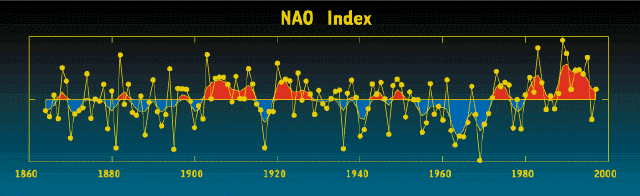
During the 1960's and early 70's Atlantic Salmon fishing was having some of the finest years possible.  This continued into mid decade of the 70"s but the decline was noticeable and having a sharp impact.  By the early 1980's things were very different and many fishing regulations and daily limits were changed.  We still had all the river specific effects of man's doing but an overall world wide decline was taking hold.  At this same exact time there was something else that had happened.  The North Atlantic Oscillation moved from a narrow or negative difference in barometric pressure to a wide or positive difference. 

Science
Over the past number of years information has been gathered.  Part of this puzzle has been the need to understand the numbers of smolt going to sea.  Counting wheels and down stream shock counts have proven that the numbers remain strong.  The conclusion has been to look to the ocean for the issue.  Again, lets for a moment agree that man made problems like fish farms and sea lice, acid rain and natural issues as predation have effect, but don't allow us to look at the big picture.  This big picture is in the ocean and what is happening to the Salmon while at sea and the availability of food to eat.  Food availability is the key ingredient to a healthy Salmon population.  This will be especially noticed in the numbers of multi winter, multi spawning very large fish.

If we examine the current NAO history we will find that a positive or large gradient difference has been the pattern for the last thirty five years.   This effect brings strong westerly winds, warmer Southern North Atlantic Ocean temperature and colder Northern North Atlantic Ocean temperature.  When the NAO is in a negative pattern the winds are held to the south of the salmon feeding grounds off Greenland. 

Positive equals a decreased area of feeding or a band of ocean that is battered by high winds and rough seas further north and into the winter feeding areas.  A negative pattern creates a larger feeding ground or wider band of northern ocean that is calmer.  Salmon survive in an average of fourteen feet below the surface while at sea.  A harsh and rough environment means the disruption of the food source.  Can it be that the major populations of salmon thought to winter off Greenland and the Farrows Islands can be directly impacted by the weather conditions of those locations?  Is it also possible that certain river populations do their winter feeding in different locations that are effected more or less?  Are the salmon of the Kola feeding in the same winter areas of those from Scotland?  Do the Inner Bay of Fundy salmon that have been the hardest hit feed in a location not conducive to survival?   Can it be that the salmon of a single river will disperse to different feeding areas for the survival of the species?  

Nature will feed the strong to survive only to the degree of ability.  Should the ability be decreased by food deprivation, the weakest will continue to die until a level of survivability is met.   This is called the Balance of Nature.  Should critical mass be eroded to a tipping point the result will be catastrophic. 

Conclusion
Over the last five years it has been possible for me to predict the size and quantity of the salmon returning to North America.  Food and the availability of food in the ocean alone is the key factor. What man has done to harm the fish has been somewhat countered by all the good that has been done over the last thirty years.  We are now in the up cycle of this science and the next ten years should prove to be a very positive time for an angler of Salar.

So I don't leave this only to the Atlantic, you steelhead fans on the West Coast need only follow the Pacific Decadal Oscillation for your answers. 

William

Thursday, September 26, 2013

Why Didn't I Realize It A Long Time Ago

My first venture to Gaspe was in 1980.  Maine, Nova Scotia and New Brunswick were my destinations the years prior.  I really don't know why, but I decided to take a just purchased brand new 911 Super Coupe as transportation.  Must of been how the low profile Perrelli's would hold on dirt and gravel roads. Yea, that was it.....

Taking this trip was as much about the car as it was about the fishing.  I guess my love of angling had merged with the love of driving fast and both fanatic compulsions needed to be satisfied at the same time.  Talk about over stimulation.  So I pointed the silver bullet north and found the way to Matapedia.

Knowing nothing about this place turned each moment into a constant learning curve. I found myself looking at low water and fairly slow fishing conditions.  I visited as many pools as possible to get a look see and fished a few that were easily accessible.  Couldn't scratch the car or leave it out of sight. The car was a constant problem.  You know that saying, if you have to worry about something then you can't afford it.  Well there I was with a car that should not be racing around route 132, let alone parked on Route 132.

After a day or so I decided the car needed to be moving again so I made the drive to Matane.  Joseph Bates was a bad influence on me back then.  I had this great need to see all the places he talked about in his now famous book..  I was obsessed with seeing pool 45.  But as luck would be on this trip pool 45 was up river in the Provincial Park where the logging roads were too dusty for the Porsche.  I never saw pool 45.

Years went by and I continued to travel to Matapedia, Restigouche and then Grande and Petite Cascapedia's, York, Dartumoth and Bonaventure.  Year after year and time after time I fished with varying success,  The Gaspe had me and my thoughts of Nova Scotia and New Brunswick and those dreams past were now in the far distance.  It became totally about big fish in the clear waters that make the Gaspe famous.

As I have gotten older it seems that my mind is still very young when it comes to the excitement of planning the next adventure.  The anticipation is defining.  Even now as I write this I am thinking of Saturday and big Landlocked Salmon I hope to hook.  But something has changed.

There came a time on this years trip to Matane that what I saw looked different.  I feel like I am seeing the land and sky for the first time.  A feeling of guilt for advantage of just how incredibly beautiful these places are redirected my focus.  I have had the privilege to travel through this place without noticing all there is to see.  I regret not noticing and want to offer a simple bit of advise.  Don't waste your life in mere fishing and the need of the catch. Surround your life in the pursuit of life and if a few big fish are angled along the way so be it.

William

Friday, September 13, 2013

Fall Or Spring So Long As Their Big

There is one thing that Spring and Fall have in common and that is using big flies can prove very productive.
I have been working on this fly system pictured with this Renous Special where the tube and junction mare one one the same.  By taking a large rigid tube as the outside and a small rigid tube as the inner I can make it happen.  The inner tube is the stop for the hook.  Also check out the plastic cone.  This one comes from Pro Tubes and has very little weight.  If you make sure to leave just enough of the inner tube out the front you can snap on the plastic cone.  I'm really happy with this and plan a bunch more patterns.

Thursday, August 29, 2013

The Gray Ghost by Carrie Stevens

During the early 1900's Carrie Stevens tied flies for catching the big Brook Trout of Maine.  Mrs. Stevens became world famous and is credited with the creation of the modern streamer fly.  The Gray Ghost and many others used at Upper Dam are revered and endeared by every Maine fly fisher.

Tying Video Step By Step

If you would like more information about this post please Email me at flyspoke@gmail.com

Tuesday, August 13, 2013

Double Spey Case

Just finished this double rod/reel case to fit up to 13 foot four pies rods.  It's a real winner....

Wednesday, July 17, 2013

Large Trout & Landlocked Salmon In New England

It might come as a surprise to some that there are many locations in New England where you can find a Trout as large as the ones photoed.  Twenty or more inches represents a large trout in my book and they can be found from the southern part of New York to the Canadian border in most states.  It takes some looking and a lot of time on the water but they are there all year long.

Fish of five pounds are actually fairly common.  You need to know where to go and be there at the right time using the correct tackle because they are not commonly caught.  They didn't get to be five pounds by chance.

There is a rhythmic cycle to all fish.  There is an inherent nature to certain species dependent on the origin of their gene pool.  Let's discuss this as if your desire is to be on the water with the possibility for big fish.

 Learning the life cycle of trout and landlocked salmon is a key factor in your ability to find that trophy.  You must study and prove your study correct.  This is done through understanding the movement and feeding habits of each location.  Entomology and prey species are of great importance.  You will then have a need to experiment on these factors to prove your hypothesis.  When do Rainbow Trout spawn?  Browns?  Salmon? Smelt?

Have you ever gone to a new location and have no information what so ever about the basics.  I have done this many times and find it very difficult to be learning while guessing.  If I only had turned left over the bridge instead of right things might have been different.  I did not do the research and will pay the price or hope to get lucky.  Employing the services of a guide is always a good idea.

There is no reason to go for the big one without doing some work ahead of time.  Here is a checklist for you to fill out.  If you have all this information about a new destination or old haunt your chances of the big one will improve.

What is the open season and legal time period per day?
Who owns the local fly shop?
What is the target fish?
What is the optimal flow rate?
What are the insects that will be active at the time you are there and the daily hatch timing?
What is the prey and it's nature?
What is the weather forecast?
What is the temperature of the water?
What is the environment of the location?
What will the correct equipment set up be for the location?
What are the top 10 flies and in what sizes are they needed?
What is the gene specific nature of the target?  (Migration, e-migration, spawning time location specific, daily feeding habit) 

I know a high quality guide that works in New Hampshire .  One of his favorite flies is carried in three colors.  The same exact tie with the body color different.  He says that if Brown Trout, Brook Trout and Landlocked Salmon are all in the pool he can target each by color.  This is a learned experience of his working the same water over many years.

If you use the information above and make the

calls, Google the location and read as much as possible you will shorten the learning curve.   Although there are opportunities all winter long the heart of spring is beating with increasing motion.  Now is the time to understand the places you will visit.  Now is the time to study a new destination.  The insects are hatching to larva and are being bounced in the flow, the spawning of predictor and prey will start in due time and the sun is starting to feel good.  It is happening as you read these words. 

Carpe Deim 

William

Wednesday, June 19, 2013

Big Fish And The Few Who Catch Them

Some anglers just have all the luck.  Well, I don't believe that for one moment.  What some anglers have is the ability to do what is needed without even a second thought.  They go through their fishing day doing the things that have been learned from experience that creates the end result.

Take my dear friend Leo.  He has convinced me that concentrating on the speed and path of my fly is what will make the magic happen.  He can tell what the correct speed needs to be.  Have you ever made a cast that in your mind is perfect.  You even, almost out loud, say something like, "If that doesn't hook a fish then nothi............" bang it happens.  Well that is what it takes to catch quantity as well as quality.  That is what Leo can do more than most anglers.  Knowing what is happening and knowing it is right is not something that comes easy.  It comes as a recorded memory through many casts and many takes.   This is the key that will open the door to catching the prize.  You must pay attention and know what is happening when it happens.  Leo knows..........


Monday, June 10, 2013

Fly Tying Tip #132

I had a great idea passed on to me today. A comment was posted to my YouTube channel about using silver tinsel under floss bodies to make them glow.  Just a great sounding idea.  I will usually tie floss bodies and tags with a light color thread of white,  chartreuse or yellow so that when wet the under color is lighter than the floss.  You can see that on the Governor to the left that I work the bodies, tie off, and then go to the black as that is the finish color for the head.  I am definitely going to give the tinsel a try.   Maybe even holographic.

Friday, June 7, 2013

Steelhead Bottle Tubes

Waiting for the forth coat of head polish to dry on this just finished order of some Steelhead Bottle Tubes in #4's and #6's.  Some vibrant color using Finn Raccoon, Arctic Fox and Krinkle Flash.

Monday, June 3, 2013

"That In Your Grandfather's Day There Ran Salmon You Could Walk On Their Backs"

In the stellar Scottish folk song , "Neptune", written by Jim Malcolm and performed by The Poozies, the lyric states that man is what our oceans fear most.  "Neptune, I think I'm In Love With The Sea"  What we are willing to do now will have a profound influence on the world we leave our children and children's children.

"How do I woo you and make you love me"

As anglers of fresh and salt, we see many of the effects of a polluted and changing environment.  We work hard to be as clean as possible, yet the problem can not be helped by anglers alone.  Here, where I live, in New Hampshire the Androscoggin River in Gorham, one of our premier trout and salmon waters, is listed catch and release because of residual pollution from one hundred years ago.  You can't eat the fish.

"Don't oil my beaches, don't slaughter my whales"

What is happening in Russia, China, India and still to a degree here at home, is the most destructive environmental decline known to mankind.  The creation of dirty power and metals exploration is being done in ways that are not environmentally safe.  Their logic to America is, " You polluted without the slightest regard to what was happening to the planet, you were made rich by your exploitation and now it is our turn".   As an American, I must agree with the view that the world should share a turn to be wealthy and have it's people be rewarded.

But what I ask is simple.

"Don't cross me with diesel, cross me with sail"

Learn from what we did and learn that what the United States did during our Industrial Revolution was wrong.    It doesn't take me long, when I cross over many of our New England rivers, to make a comment something like, imagine what it must of been like that fateful spring when all the migrating fish were trapped below that first dam. The result might make the wealthy have more money but the people will pay the price.

"Give me some time to heal up my wounds"

Today in the USA environmentalists are pushing hard to reclaim our rivers.  Dams and pollution sources are being removed from the landscape.  Steady improvements are being made to water quality.  All over the world in the large three countries mentioned to some very small, there are highly motivated people who want security for their families.  That security will only be available if the planet that is inherited will be free of the illnesses that are inevitable if the path to riches without regard is followed.

Push The Issue

It is very easy to just move forward and rely on others to take care of this matter.  I recently made a small step and joined Trout Unlimited.  I think that small steps by many needs to be the course to follow.

"Give me more poison and I will die soon"

In the spirit of my belief, I have started the FlySpoke 'For The Earth' banner.  This is a list of organizations and charities that are making a difference that you will find in the left hand column on the front page of this blog.  Please look them over and help if possible.

I realize how small I am in the scope of this issue.  But I feel compelled to be that small part.  Angling is a big part of my life but angling in pure water and breathing clean air is far more important.

"Neptune, I think I'm in Love with the sea"

Please email to me any organizations you would like to have listed.

William