Tuesday, January 29, 2013

Blue On Steel - A Swinging Fly For Spring Steelhead

I love to fish in a number of different styles.  That said, my top two favorites are the pure swing and dry fly casting for Atlantic Salmon.  The very next would be the two hand swing for steelhead.  

In many ways, steelhead angling is quite a bit harder than some other form of swinging flies.  Except for a few locations out west, we are having to throw large flies and getting them deep.  We must work hard in colder weather and understand the nature of the fish far more intimately.  Let's take some time and look at the features that make a steelhead swinging fly effective.  Here is the recipe for the fly pictured above.  More items like rubber legs and body hackles could be added but not necessary.

Hook-Gamakatsu Light Wire Stainless Long Shank 
Outer Tube-Eumer Large Chartreuse
Inner Tube-Eumer Small Blue
Butt-Chartreuse Short Eztaz
Butt Cover-Blue Charm Blue Arctic Fox wrapped 360
Body-Bill's Bodi-Braid Pearly Blue
Under Collar-Blue Eared Pheasant Long Dyed Black
Wing-Black Arctic Fox Layered With Blue Mirror Crinkle Flash
Collar-Spey Plume Kingfisher Blue
Eyes-Jungle Cock Nails
Head-Black 70 Denier Thread With 4 Coats Head Cement

If we start to analyze each ingredient I think a few things that should remain constant in many steelhead swinging flies will be understood.  Ed Ward's Intruder should also be looked at as a model.

The hook has a longer shank for a reason.  We need to get the hook as far back into the wing as possible and at the same time not create such a heavy back weight that the hook will bend down and  away from the wing when swimming.  Heavy gauge hooks are not desired in these flies and should be avoided.  Gamakatsu makes wonderful lighter wire hooks that are as strong as needed.  I have never broken or bent one.

The tube that I use offers a wide bulbous look from both top and bottom.  After all, the fish don't look at a fly like we do from the side.  They most likely will see it from the back and underneath    I have found that this wide look is by far more effective than building narrow when looking down no matter what the profile.  In order to do this you must have a wide platform.  There are two problems when using the standard way to build a tube.  Most of the time a larger size tube will be used to tie the fly and then a larger junction tube will be placed over the back to hold the hook.  My way is to use the large size tube to tie the fly and insert and glue in a shorter piece of the smaller diameter tubing leaving room in the back for the hook to slide into the larger tying tube.  I find this system is perfect and works very well because the lighter wire hooks are still held firmley..

The use of Eztaz and then the Fox over has the purpose of making sure the wing and collars keep a wide flow.  The larger the butt the larger the effect.  Again because the fishes view of the fly is from behind the Eztax stares them right in the face.  Steelhead love Extaz.

The body on these flies is almout not needed.  I use very sparkly braided or holographic materials so that if the body were to show it has some flash.  You can dub with a palmer style hackle if you like.  For this fly I used the braid and then a collar of Blue Eared Pheasant.  Any material put in as a hackle or under collar has the effect to lift the wing.  It will also have the effect of under flow to the wing as well as acting as the throat.  It will mix in later with the wing and outer collar and is an opening to introduce contrast.  Colors like chartreuse or blue are greatly enhanced by using black under or over.

For the wing I used long Arctic Fox in black.  Temple Dog, Finn Raccoon, Arctic Runner and Icelandic Sheep are some other good materials.   Getting really long hair fox is not that easy and when you see it with four inch hair buy it all.  The best way to get the look is to take a clump of hair and with your thumb and index finger push the top hairs longer and the bottom hairs of the clump shorter.  A simple sliding of the fingers.  You still have the length in the hairs on top and make the trim for the head when the shape is what you want.  First you trim, then place on the top of the tube and then spread out the hairs over the top side to side of the tube to form that wide body look.  As you build the wing you can put in the flash of your choice.  This flash works best if put in the second layer and can be seen from behind and below.

Spey Plumes make wonderful movement in the front of the fly.  Water will flow by the plumes and have the wing dancing.  This movement is one of the most important aspects to a steelhead fly.  The fish are very attracted to the action and is the reason I don't weight my flies.  I will put a baffle on the front at times for added movement but never a cone head.  I use my tips to gain depth and keep the action in the fly.

With this style we are able to keep the hook toward the back of the wing, the width of the body and have a tight hook placement.  Now just create a color group and you have a simple and complete fly for a two hand steelhead swing.

William


Wednesday, January 16, 2013

Head? Tip? Poly? One Rod! Head? Tip? Poly? One Rod!

Who carries hundreds of different combinations of line, tip and leader additions to be used on one two hand rod?  The question should be who doesn't.  No need to be confused about this topic as the market and understanding has evolved nicely over the last thirty years.  Line weight is the only part that should be in question as the marketing schemes of the line and rod makers can make things more difficult.  The only way to know if a line matches well to your rod is to try all the options.  Unless your fly shop has all the options to demo you are taking your best guess. Like I said this part of the puzzle is difficult  Don't rely on grain weight windows.  Send off your exact information to the line and rod pro staff members of each company and ask for details.  That is what they are there for and they are testing all these products all the time.  Don't be shy and make sure you give all the information as to where you want to use the items. 

The first time I saw a poly leader was while on a fishing vacation in Scotland.  The gent behind the counter told me you don't fish here without one.  That was some fourteen years ago and I purchased all the sizes that they had in the shop. Today, there isn't a shop that doesn't have a collection available.

In the Pacific North West, the steelheaders like Al Buhr, Mike Kenney and Steve Godshall have been cutting and designing lines suited to short head Skagit style for many years.  When Goran Andersson's father would not let him purchase another line after he cut one back he was forced to add a long leader and change his casting style.  Scandinavian underhand style was invented by him out of shear necessity.

Because no two pieces of water are a like, your willingness to carry many different store bought and home made sinking possibilities will offer great advantage.  It really doesn't matter the species or location when it comes to being prepared.

My swinging kit for a 13 foot 8 weight TFO medium flex rod is as follows.  I also use some of these same lines plus others for a Sage 8 weight switch rod.  Target fish include Atlantic Salmon, Striped Bass and Steelhead.  This list does not include all the leader possibilities and is as complete and accurate as my memory allows.  Now is the time I wish I would have listened to my own advise and marked each item with a code or tag.

Line-AirFlo Delta Spey 55 foot Short for Pure floating Spey Casting Swing
Line-Rio Powerflex Mono Core Shooting Line Quick change between different heads for shooting Skagit, Scandi and Salter.
Line-Teeney 33 foot sinking tip with integrated floating line for Salt water strip back and overhead salmon from a Gaspe Boat.
Line- Rio Windcutter 55 foot for pure swing with 10 foot tips and standard length leaders pure swing
Head-30 foot level floating shooting head
Head-30 foot level intermediate shooting head
Head-30 foot level medium sinking shooting head
Head-30 foot level fast sinking shooting head
Head-Rio 450 grain Scandi Short
Head-Rio 525 grain Skagit Short
Tip- 10 foot level floating
Tip- 10 foot level hover
Tip- 10 foot level intermediate
Tip- 10 foot level slow sinking
Tip- 10 foot level medium sinking
Tip- 10 foot level fast sinking
Tip- 15 foot level T11
Tip- 10 foot T11
Tip- 5 foot level T11
Tip- 3 foot level T11
Tip- 2 foot level T11
Poly- 5 different tapered floating to 7.6ips 5 to 7.5 foot length Rio & AirFlo
Poly- 5 different  tapered floating to 7.6ips 10 foot length Rio & AirFlo
Poly- 5 different  tapered floating to 7.6ips 12 foot length Rio
Poly- 15 foot floating Rio
Plus various cut pieces and shortened tips and lines.

Imagine all the different combinations possible from this collection.  How a math geek would figure it out I have no idea, but I'm sure it is a substantial number.  Do all get used all the time?  No.  Am I ready to link together what might be needed in most situations? Yes.

Most of these items come ready with welded loops to link together.  Loops sometimes get a bad rap and to think that way is not being open minded.  Having fused loops on all the above is required to make the system complete.  This involves taking thinner fly line cuts and fusing them to the thicker ends.  There is no need to fold over the end of a cut line.  A great book called How to Design Fly Lines is written by Al Buhr.  It might only be a pamphlet but it is a complete understanding of how and why.  Al told me that he thinks of the floating portion of his line like your hand and the different style of tips as fingers dipping down into the river to act as a probe.  Each situation requires a different finger to reach the target.  How many fingers do you have?  How many do you want?  How many do you need?

There is a perfect presentation to each and every fish we find.  Trying to understand and cause that swing can only be performed if we have the tools to do so.  Having the tools will open your mind to making it happen.

By going to a well stocked fly shop where they understand Spey and Switch and having one of each of these items in your hand will clear up a lot of the mystery.  Making the purchases, learning to build your own loop end tips and lines and getting out to try each will open the door to a greater number of fingers to probe your favorite run.

William


Monday, January 14, 2013

January Thaw And A Few Trout

It was time for a change today.  For one, the air temperatures started where they usually end up for a high.  The other is that with the slight up tick in water temperature the fish moved from steak and eggs to small nymph patterns.

This is when you will move to thinner tippets as well as changing fly size.

I started this day in the usual way getting up so that I can be on the river just before the dark is passing.  I had worked on some flies the day before and had my collection of Orange Blood Dot Eggs all ready as they were the top fly on Thursday.  The first pool with the eggs produced nothing.  I was puzzled.  Off to stop number two.


Making a short walk through the woods gave me a great feeling.  Calm air with the snows condensation rising to the warmer air above was very peaceful.   The river flow was steady and clear and I had the confidence of knowing there were more than a few good fish to be captured.  I continued throwing the eggs.

After watching a fellow angler take two fish from river right I decided that a change was needed.  Switching out the dropper to a size eighteen Olive Turkey Biot proved true and I landed three beautiful winter bows from the run.  Then switching over to an Olive Sparkle Top Jailbird continued to take two more.

As the day moved so did I.  Up to a favorite run that was sure to be productive.  I had the right flies but the pool produced nothing.   Back to stop number two where I released one more for the day.

I completed my time a bit early.  Six Rainbow Trout, with the smallest measuring sixteen inches, is good enough on a warm spring day let alone January 13.  The small flies will continue and then start to get a bit larger as we move toward spring.  The first hatches will come and the regeneration to small will be in place again until the last hatch finds each species beneath the rocks for another years cycle.

For right now, find some open water and think of the winter as a perfect season all to itself.  After the fish start to shun the meat flies just think small.  Dry fly season will be here soon enough and the warm sun will trend other changes.  Carpi Diem.


Tuesday, January 8, 2013

The Little Black Caddis

Ever been in the middle of a Caddis hatch.  You know the one where the tan and brown adults are dancing all over the surface.  So many that it is hard to understand why your perfectly tied #14 Elk Hair or Henryville isn't getting the time of day from the fish.

Next time it happens look very carefully into the surface film.  The Little Black Caddis makes no commotion as it sits on the surface laying its eggs.  The trout seem to be lazily sipping while hundreds of the little ones brethren dancing all around.   I am a firm believer that trout eat what tastes best at that moment.  If you are given a choice you will eat the one that tastes best as well.  Have a few of these tied in sizes 16 and 18 in the box and look to see what might be hidden.

Click on the photo for the tying video

Monday, January 7, 2013

New York Spring Steelhead

There comes a time when the forward edge of winter is at hand.  Right now is the time to get ready before that time passes by as it will be upon us very soon.   I noticed today that the light of day is stretching just a bit longer.  Makes me feel good all over.

This new beginning will see flows constant and clear, steady and even air temperatures and a fresh run of the largest fish of the year to keep things interesting.  The exact start and conclusion, before the melt  and spawn begins, can not be exactly predicted.  It must be recognized and acted upon.  I make sure I am ready by the middle of February and most likely look to the first week of March.

On one trip to South Sandy Creek in New York I had fished most of a day without much luck.  One fish had come to hand yet I continued working hard.  The snow was high on the banks and the river was flowing normal and clear.  To look at the river you might have the word perfect pass your lips.  It was about two o'clock and the magic started.  For one full hour I hooked eleven fish all with the same chartreuse eztaz egg pattern.  It was like a switch had been thrown and the sky parted and heaven was shinning on me.

This was that time of pre spawn when the fish are waiting for the water to feel just right.  The snow in the hills hasn't started to fill the rivers and the daytime temperatures don't cause what is on the banks to melt in and cause colder flow.  The range of air temperature you are looking for will be in the mid twenties at night and raise to thirty nine during the day.  This will cause a gradual rise in water temperature from the deep winters blast that can be measured in very small increases per day.  It is these quarter degree increases that will put the fish on the bite.  Too warm and the melt reduces the water temperature.  Too cold and the water stays that way.

This is also a time when the big waters will have an ice cover and the ability to make lake effect snow will be diminished.  The rivers will have the greatest number for the season in the runs and pools and the males will start to get aggressive.

This short window can produce some of the best action of the winter and will only last a very short time.  As the sun gets higher and days warm the rivers will start to fill and the fish have spawning on their minds.  By the beginning of the third week of March, depending on water conditions, some of the fish will have spawned.  They become very hungry and will take a fly with passion.  Drop back season through the middle of April becomes a great opportunity for hooking numbers of fish per day.

Within each and every season there a window that can be open.  Sometimes for a day and maybe a bit more.  Sometimes as short as an hour.  The keys to taking advantage of these times is our willingness to study and make the trip happen.  If the window closes, don't worry, it will open again for the post spawn drop back frenzy.


Tuesday, January 1, 2013

New Years Day 2013

I woke at four dark thirty, New Years Day 2013.  I have a full day fishing ahead and am very eager to feel every minute possible.  Sun up till down offers me a sense of life that no other experience can.  There is something cathartic for me and if I can throw in a few fish all the better.

The water gauge was up for the last month with rain and snow.  This is just the situation that pushes the salmon and trout out of the lake and spills them at our feet in the river below.  If the lake has had a good fall then the river should have a good winter.  I have been watching the gauge all week as it made a steady downward fall and then an abrupt fall to perfect.

Arriving on the river at 6:30am the cold that is on the way will hold off for most of the day.  Single digits are in the near future but for the morning a balmy 35 degrees greeted me and it feels good.  I decided to cross and start below the falls.

Two hand switch, 5 weight, 10' 4", ultra short 12' Skagit, indicator to swivel, 3X Seaguar FX, bead head olive leech with a black Ghost Finn Raccoon.

Normally I like to start off swinging but I decided to leave that rig in the car.  With the temperatures expected to decline through the day I also expected the water to move downward.  It that happens the fish will not chase.  I decided to dead drift and feed them.

Within the first hour and a half I had six fish hooked and four landed and released.  The best was twenty inches, a bit milky colored and must have been in the river for a while.  After the action died with that tandem I started to change flies.  This is January and meat is usually what works best.  Eggs, worms, spawn, roe, streamers.  I continued to take another two fish and resided to move up river.   The orange egg was on and in the middle of the pool the best fish of the day came to net.  Perfect and fat as can be.  She measured 21 inches and everything a deep shouldered beautifully colored trout should be.  We released her in the shallows and watched as she gently swam away.

A couple more here and there and the day slowed in tempo and was complete.  The wind was blowing, the temperature had dropped fifteen degrees and calling it a day after hooking eleven fish was joyful.   The very feeling I had been thinking about for two months was real and all I could have expected.  The very best way to start the year and the most important thing was I did it with friends.

Happy New Year everyone.  I want to thank all of you who have found this blog.  I can't believe the numbers of readers each day from so many countries around the world.  I never dreamed having a little fun could travel so far.

Always the very best,

William


Saturday, December 29, 2012

To Loop Or Not To Loop, Is It Really To Be Questioned?

I understand the aesthetic value to a perfect nail knot.  I also know that having a loop connection on some of my lines has purpose.  The reason to loop is that you might expect the line will be used with tips or poly leaders.  A Skagit should always have a loop.  The reason not to loop a line is if that line will never be used with tips or poly leaders.  Your three weight dry fly line has no need for a loop and should be treated as light as possible at the connection between line and leader.  End of story.

I saw a quote today that read, "as soon as I get a new fly line I cut those #$#@#@$%$# loops off".  Let's just say that I like to keep my options open.  Our fly lines are the vehicle that delivers the fly in the correct presentation that is needed for the fish to take.  The fish doesn't give a damn if there is a loop on your fly line or not.

To Loop Or Not To Loop is an easy question to answer.

The Relationship Between Fly Rod & Fly Line

The late Lee Wulff was a great proponent in getting us all to think small.  Ultra light was casting without a fly rod and only using his arms to propel his fly.  His feeling was that there was no necessity for long heavy rods and that going small was a more exciting way to fish the fly.  To this day, even with the advancement of two hand rods,  that concept is still strongly held in North America.  Rod and blank manufacturers continue to make their products as light as possible.  From the marketing perspective, rods were made shorter and lighter because anglers have been convinced it is the more sporting way.  The merits of this concept are worth a discussion all to itself as a greater number of long rods are being sold.

Over the last few years, here in North America, I have seen the number of anglers using two hand rods increase dramatically.   Eight years ago I put down my single hand trout rod, except for dry fly presentation,  in favor of a 10' 4" switch 5 weight.  My thought was that learning how to use a switch rod would greatly advance my ability to swing streamers as well as high stick nymph with a dead drift.   The advantage was clear to me and I didn't see another being used until last few year.  Now the current momentum to Switch Rods is overwhelming and is a perfect example of an industry life preserver.   One item that creates the cash flow necessary to keep a company current.    Happens all the time in many different industries and in this case it is not a brilliant  marketing scheme that is pushing the trend..  Though the old European art has endured, what I call the Wulffing factor, on this side of the pond, getting lighter and faster seems to be the trend.  All my casting teaching also seems to be in relation to two hand and mostly how to get the most from the switch rod.

My thoughts on this topic are that there is a perfect rod, reel and line for every situation and each are different.  Today there is a growing number of us who are extending our ability with the use of longer rods.    The trick is to know and understand how wide the range of lines is that can be adapted to each rod.  Then take that adaptation to each angling situation for maximum overall result.

Certainly the Matapedia and it's big water and big fish in June requires something very different than Matane at the beginning of September.  What you will find in Quebec though is that there are many of the locals using the same rod with the same line for both possibilities.  Hardly any anglers will be found with a rod over nine feet long.   Conversely, in the Pacific North West, most steelhead casters have moved into two hand rods.   Switch rods of eleven feet and two handers in the thirteen to fourteen feet lengths.  The understanding of what each style of rod and line offers is a key factor in making the best choice.  And on the Western Rivers they understand that what is right for the Salmon might be something completely different for optimal swinging on the Clearwater.  What the market brings to the table is as varied as the waters we fish.

Fast or Slow

The first criteria to consider is the composition of the rod blank.  The number one question you must ask is what is the composition and design of the rod.  Modern technologies have not changed the process used in creating a fly rod blank as much as what materials are used in the creation.  The latest formation of Carbon Nano fiber is being grown in laboratories and spun into the basic thread.  The concept is that if you can make a molecule into a thread and then weave the thread to cloth and impregnate that cloth by adding resin and then backing it for strength to cut it to shape and roll around a mandrill to be baked, sanded and finished you can make a fly rod blank of various flexibility determined by the density and hardness of the thread and bonding composites used.  Make sense?  To make a beautiful looking fly rod blank takes time, expertise and great imagination that is always looking to the future.   If you are making blanks like last years models the market will leave you behind.  This progression for better or not is the governing factor in the fly rod industry.

Back in the day, Alexander Grant used green heart wood that he spliced together to create the first two hand rods.   His Scottish home river, the Spey, has the fastest descending current of all Highland rivers and the concept of standing high and dry on the bank required a long rod.  Being able to lift, sweep and change directions for the forward stroke was made possible by using two hand rods of sixteen to twenty feet.  Long casting was not the focus as the Laird of the Castle had the beat all to himself and the best pool with easy access was always his.   The action of these rods was the farthest extent to slow as would be possible.  The flex started at the tip top and extended right through the bottom grip.  We call this full flex.

Today, the marketing trend has been to go faster and faster with rod action.  This means that the rod flex is at the tip and not much farther down the blank.  A great reason for this is that the line companies have changed the formula that dictates the weight of the front part of their lines.  How does one company get you to think their line will cast farther?  They put a little extra weight to the front of the line that makes the rod load more and we think it is better.  They take turns adding weight until the rod maker must increase the stiffness of the blank to handle the extra weight of the line.  Is a five weight still a five weight?

If winning a distance casting contest was the goal, I would use the advantage of the ultra fast rod.  If winning an accuracy casting contest was the goal I would use a slower action rod.

Are we fishing or are we casting?

If fishing under most conditions and landing the fish is the goal the softer action wins hands down.  Many Eastern anglers are enjoying light tippet nymph fishing for big trout and Great Lakes Steelhead.  They don't understand why they are not landing any fish when the answer is right in their hands.  Notice the the center pin anglers some time.  They are using the same 3X fluorocarbon tippets yet land a high percentage of their takes.  Again the answer is in their hands.

The key to fishing success starts with rod choice.

Lines

This is an option that will never be perfect.  Just look at any of the major line companies catalog and it becomes self evident that the array is so varied that one line, or five lines, will never satisfy the ability that one rod offers.  For most of us, we can get a feeling of general application by keeping a log of the fishing days we spend in any given year.   If you can, right now, take a calendar and note each day you spent fishing.  Try to analyze that day as to what the perfect condition would have been.

Monday, June 2, 6am-10am, cloudy, wind 10, air 50-60, water 47 medium flow, midge hatch, caddis hatch
Sunday, November 10, 8am-2pm, wind 4, bright sun, air 30-40,water 38 low flow, BWO hatch
Tuesday, January 1, 7am-11am, wind 9, partly cloudy, air 18-24, water 33 high flow, no hatch

In the three trout fishing examples above you could most likely need three different set ups from rod to line to leader to tippet to flies.  If you really look at these examples what you will find is that all could be changed within each example more that once or twice during that outing.  I fish many days with two or three rods at the ready.  I know the conditions before I go to sleep the night before.  I make my rod and line choices and do the set ups ahead of time.  Right now I am working on January 1.  I know that the forecast above is what I can expect.  It makes my choice of rod and line very clear.

Long rod, light weight full flex no more than 4 weight, short head line for flipping weight and indicator.

Why
Long Rod = Stay shallow and stay warm in cold air and water temperatures and still have line control.
Light Weight Full Flex = Water is crystal clear and extra light tippet with forgiveness is required.  I am always looking for a trophy and want to have what is needed if it were to happen.
Short Head = Casting a short over sized head requires little inertia from the rod.  The weight of the head that is easily loaded on the softer rod turns over the weights and you have only thin shooting line collecting ice in the guides.  Cold weather fishing requires as little pulling line through the guides as possible due to ice build up.

The above set up also allows me to make changes should I want to use streamers and leeches.  I simply remove the leader and put on a poly leader and I have a short head Skagit style rig.  Options of my line choice are sometimes required and having as many options for that one rod might be what is needed for a successful day.

I hope that what you will take away from this post is that any rod and line combination will only be perfect under a perfect condition for that combination.  That there are infinite possible combinations that will be correct.  These different situations can be but a short distance apart in any given water body.   Having as many rod and line options and the understanding of what they do is important.  Being willing to take the time to change to what is optimal has it's rewards.  And thinking about and using this knowledge will enhance the presentation of a fly in the most pleasing way to the fish.

William

Read Additional Resource Information from Fly Rod & Reel Magazine


Monday, December 17, 2012

Fly Tying Tip #130

Brown Trout Spawn

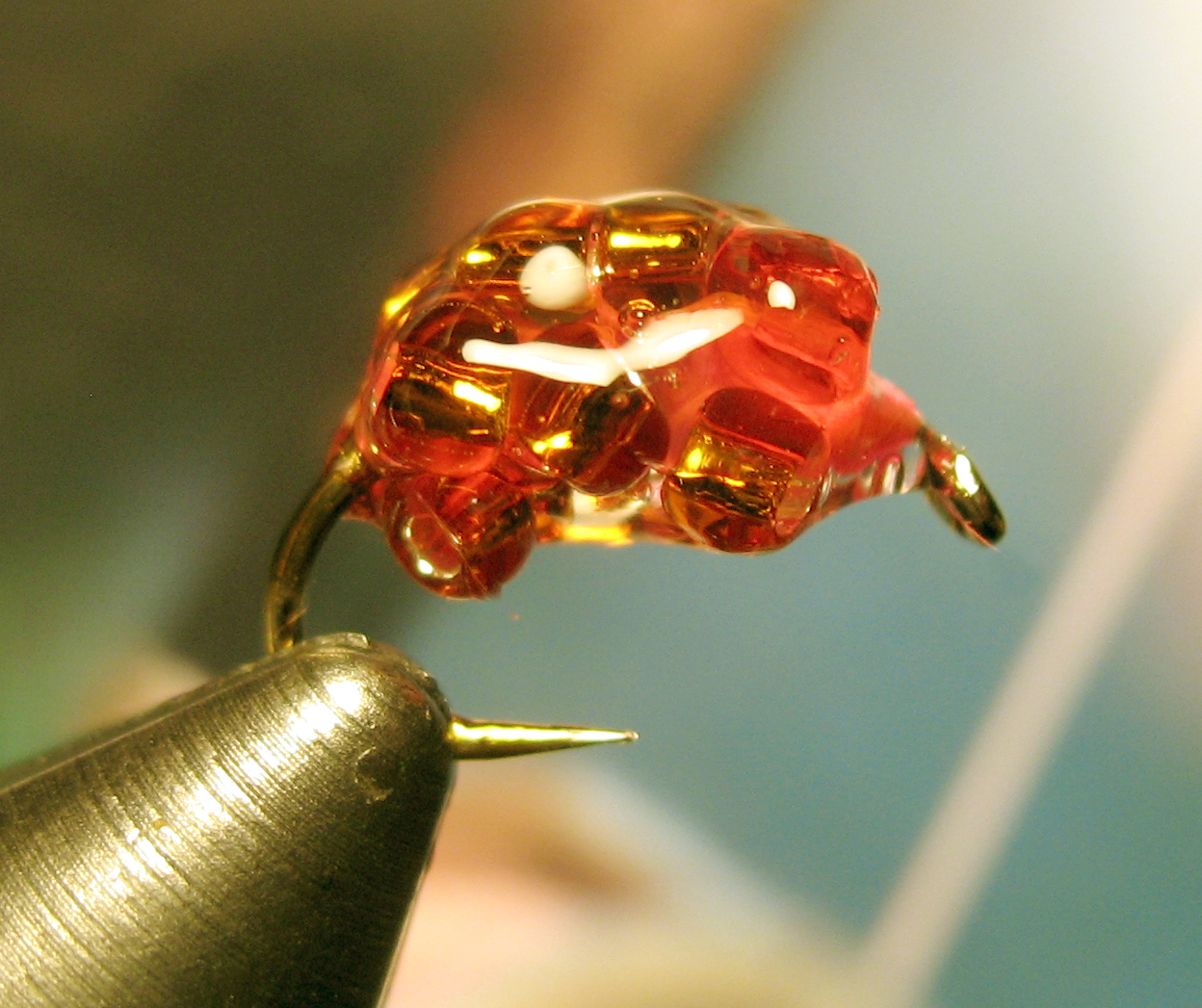
A fly shop is not the only place to find fly tying materials.  Sometimes our creativity can be stifled by being limited to the materials at hand.  Go have a walk around a fully stocked bead store and see what you can find.  It might open the door to something new. 

Sunday, December 16, 2012

Special Regulations Opening Day

I fondly remember the opening days of my youth.  These New Jersey events happened each year in April and made the closed season very long indeed.  The excitement of that time is still ingrained in my psyche as I now have many opening days to consider and experience.  I feel like a kid in a less than juvenile body.

January 1, April 1, the first Saturday in April, the second Saturday in April, April 15, May 10, June 1, June 11 and June 15.  In addition to these dates there are others that will be important to you especially if you fish ponds and lakes.  Around the country there are many dates that open a season for many different species.  The understanding of these dates and locations will give you an order to your year as an angler.  Start checking the information provided by your states Fish & Game as well as the others near by and you will determine what is important.

Here, where I now live, in New Hampshire we have rivers that don't close.  Some locations receive their best stocking during October and November.  They are a great asset to the state and on some nice late fall and winters days being out and hooking a few fish can't be beat.  The opportunity to fish a twelve month season is possible and I do my best to take advantage of the situation.  Massachusetts holds a few locations with tail water releases that keep things going through the dog days of summer.  Many anglers head that way during July and August.  These kinds of places exist in a number of other states as well.

I remember opening days back in the 1960's where the trout streams were crowded.  If I were very lucky my Mom or Dad would take me to some better locations for the day.  Big Flat Brook was a real high lite and Upper Saddle River or the Ramapo River were the norm.  All well stocked streams and worth a visit even today.  I fished as much as possible and did my best to learn.

It is clearly that feeling of anticipation that keeps my youth alive and my mind fantasizing about the future.   The most important thing any young angler can do is keep a log.  You will have the record of your days and those days hold the forgotten secrets of days to come.   Sadly, I did not do this and have only photos and memories to relive through this blog..  I have no idea what the water temperature was on a given day or the flies that worked best or the conditions that caused a better day.  I do have the collective experience but know that I would be a better angler today if I had that record of events.

Three AM and I am having some coffee.  I'm up when the alarm sounds and doing my best to get out the door.  My gear was already worked on and packed and is ready to put in the car.  January first is the first opening day in the New Hampshire season.  The weather can range from cold to too cold and I have a rule that single digits will keep me home.  Guides freezing is for sure even at higher temperatures while being cold will be kept at bay by wearing multi layers making me feel like the Pillsbury Dough Boy.  Boot foot waders are a must as the difference in foot warmth is dramatic.  Head gear will be used and tip free gloves that I will try all day to keep dry.  A second pair tucked inside my waders in case I catch a big fish that requires getting wet.

A second complete set of clothing will be kept in the car.  Fall in the river with water at 32.6 and you will need to change or go home.  Also in the car is another heavy coat.  When you get too cold to get warm you will want another layer.  I wear two pair s of socks .  The first is a thin nylon and the second rated for 30 below zero.

In sixteen days I will make the one hour drive to meet up with the same crew that I meet each year.  The same friends that share the passion and excitement and banter and joy together for many years.  We fish and sometimes hit the mother load and some time nothing at all.  It simply doesn't matter.  It's opening day, it's a New Year and I am counting down the time right this minute.


Tuesday, December 4, 2012

You Can't Have Any Pudding Till You Eat Your Meat

Larger trout, especially browns, like to eat big meals.  I have been tying some bunny tail flies lately that are a take off of Vermont Guide, Mark Wilde's fly The Wilde Thing.  A few different materials but essentially the same thing as far as the fish are concerned.

What the pattern mostly reminds me of is a simple Pheasant Tail Nymph.  Tail, abdomen, wing casing, thorax and legs.  Pretty simple but effective as any other fly I have been using lately.  Mark ties the fly with a b it of weight on the top of the hook so the point rides up.

Give it a shot and fish them low and slow. Try something big and articulated.  Change colors and materials, add flash or not as well as the weight.  I think you will be very happy with the results.


Thursday, November 29, 2012

Swinging For Chrome Is Not Pure At Heart

Being an avid Atlantic Salmon angler, for more than forty years, has given me a strong affinity for fishing the swing.  Watching my fly speed and creating what has become an instinctual learning experience, as to what is correct, has taken some time and many fish to fly.

Come on, you know that feeling.  You make the cast, the fly hits the water and the line looks perfect.  You don't know it's perfect but it sure looks good.  That's what I am talking about when I say "learned instinct".  The time when you say to yourself, "that's the one" and it happens.

Now in this age of a growing steelhead fishery in the Mid West and New York state, swinging with two hands, for me, is taking on an entire new meaning.  To incorporate my traditional down and across mend free swing learned for best advantage when the target is Salmo Salar would result in few fish when the quarry is chrome.  We all love the stories of fish charging across the pool to attack our fly.  You can just forget about that one.  Putting our fly in the fishes face and having the speed being slow is an absolute requirement.  As the water temperature gets colder this aspect becomes more and more necessary.

I love two hand casting and have worked especially hard practicing and studying the art.  I recently attended a workshop with Al Buhr and Jim Valle, both true Masters, that opened my eyes wide as well as the window of possibilities the swing will fit through.  Try to think of it this way.  The floating portion of the line is the vehicle and the tip with leader is PROBE.  As I said, for fall and winter angling we must slow the fly down and have the depth running correctly.  Not dragging the bottom but almost.  

So how do we satisfy our desire to swing and at the same time achieve the pin point in their face presentation necessary to get these fish to bite?  Cold fish less days can be hard to take and at the same time there is a high probability that is what will happen.  Let's do our best to increase the odds.

I have changed the pure Swing into the Swimph.  Not just in presentation but even in the equipment.

First comes the rod.  I leave my fast action rods at home and use through the butt flex slow reaction tapers.  Commercially, a TFO traditionl progressive, regressive, taper works well.  Also the TFO switch rods with through the grip flex will work.  The reasoning is that these fish are leader shy and at the same time like a great deal of movement in the fly.  Rabbit Tails, Zonkers and Temple Dog styles get the most reaction for me.  This requires us to use as light a tippet as we dare where a fast action rod will result in too many fish with our flies left in their mouths.   The lines are all short head heavy Skagits.  These floating heads must be able to handle a fifteen foot 7 inches per second poly or a two foot piece of T14 or whatever is needed to PROBE the lie.  The flies can be up to four inches long and very heavy to pull out of the water.  I don't like fishing weighted flies as I feel the action is greatly reduced.  I prefer the correct tip choice and tippet length.

Think of this PROBE as different length fingers hanging down into the current that will bend perfectly to the bottom off our floating hand.  What ever the fishes lie requires in depth and current speed must be in your ability to recognize and PROBE.  The Skagit head gets the tip and leader to the ideal location and the tip or poly leader puts the fly at the correct depth to fish the lie.  Going an entire day, or even an hour, with the same tip system is not going to work.   Each fish in each location will require a different set up for a  perfect presentation.  The more you fish a piece of river the greater your understanding will be in many different conditions and the greater your chances will become for success.  Knowing what is in each pocket and behind each rock gives us great advantage.  "Learned Instinct", will take over even if you don't know you are using the power.

The easiest way to explain the way I Swimph is to say that I am swinging in a nymphing style.  The casts are mostly short ninety degree or greater Single Spey.  In our clinic, Al asked what we thought was the best cast.  After a brief pause he said the best cast was the one that returned his fly to fishing in the least amount of time from when it was last  fishing.  Of all two hand casts, the Single Spey is the one that can't be beat.  I now fish the Single Spey with dominant up or down most of a fishing day and would estimate that I add about fifteen percent more fishing time to a day than when using Pokes, Doubles and Circles.  Time yourself for ten casts.  You will quickly understand.

After the fly hits the water I will want to slow down and make mends in the same exact way as when we are nymphing.  The dead drift technique is employed.  I try to make my fly swim equal in speed to the current to achieve the correct depth.  When the line starts to extend into the forty five degree area, a common Salar presentation angle, we then want to cause Dangle Time as much as possible.  Again the incorporation of up stream mends will slow the fly from crossing the current too quickly.  Each and every Swimph watched and fished with the precision of what feels perfect is being sought.  

At the end of each drift let the fly dangle for a moment.  Start your retrieve to set up the next cast slowly.  Many times the first pull of the line will trigger a take.  The higher the water the more fish will congregate close to shore and the dangle becomes a more important tool.

I guess the last part of this is the question of whether Swimphing is really Swinging.  In my opinion, the answer is absolutely   I am using a two hand rod that is casting the belly of the line with casts that are common to tradition and adjusting the drift to the requirement of the quarry in an optimal way with the use of weight on line or fly.  

The nature of the fish we seek determines the way we look.

William

Friday, November 16, 2012

Throw Them Some Line

Ever have a big fish get caught up in the current and head down river leaving you helpless?  Our first thought is to hold tight.  But that usually doesn't work on a light tippet.   Then possibly follow as fast as possible.  This is all happening quickly.   And then what? What if option one and two are not available.  Then what?

The natural instinct for a fish is to flee from the direction that seems to be the source of danger.  When we pull on a hooked fish, the fish will pull back naturally in the opposite direction.  So a very good tactic, that I have used many times, is to reverse the direction of the danger by throwing line off my reel.  I do this as quickly as possible to create a down stream belly. This action will force the fish to move opposite the danger.

The main factor to consider, and you will not be allotted a great deal of time to make the choice, is the environment below your position.  When I am driving a car I try to know my surroundings both behind and in front and on a river I try to know what is below and above.  Calm water below with easy access will result in being able to move down.  Continuous moving water requires quick decision to chase or throw line.

Don't be afraid.  React quickly and see what happens.

Thursday, November 15, 2012

I Call It Dangle Time

How long are you willing to let your fly dangle in the current at the end of a swing?  It's a simple question that I would ask you to consider.

Sometimes we are so quick to cast that we diminish the chances for hook up dramatically by not letting the line sit.  On a number of occasions I have been in the middle of conversation with an up stream angler between casts when the fly gets smacked.   My rule is that the deeper and higher the water flow, the longer the time to dangle.  In higher water, travelers are moving up the sides where there is less water resistance.  If you must, force yourself to do so. Creating what seems like the perfect amount of time, then counting to yourself will pay off, I guarantee it!!!  After it happens you will not need to count any more. 

This rule applies to all trout, steelhead and salmon angling.  It also applies to nymph fishing as well.  Pop up on the lift and then wait a moment before casting.

Another option is to make the fly dangle in other locations in addition to directly below our river position.  If you were to cast down and across and immediately throw a big loop mend up and out you are slowing down your fly from moving sideways.  Mend again, and again, and again and you continue to slow down and in some river current conditions keep the fly in a zone for a much longer period of time.

Should you do this on every cast?  No.  The dangle is just another piece of the puzzle to give credence and cover certain situations.  But waiting a moment before that next cast can produce some very hard takes.   Another aspect to the dangle is the 'pull and drop'.  When you have your fly on the dangle pull up slowly and then let it drop back into the fishes face.  This can produce a very strong take possibly from aggressive irritation.

 Having confidence is a key component to successful angling.  The things that make up every cast are the things we believe in and I have made the dangle a powerful go to option.  Pick a good fly with lots of action to dangle and count one thousand one , one  thousand two........................

Sunday, October 21, 2012

Swinging For Chrome, For Love Of The Steelhead

I have never fished in the Pacific Northwest.  That's a sad statement for me as finding the time and resources to do so is high on my list of adventures.   I read and watch video of Steelhead in that pure and spectacular part of the world and can only imagine what western steel dreams are made from.  Cold and clear, crisp and powerful, those rivers of the North Western United States and South Western Canada, can only be associated to my favorite haunts when I am in pursuit of Salmo Salar.  To me anadromous silver has the deepest angling reward I have experienced.

At the end of October, when the Canadian Atlantic Salmon season draws closed, my attention shifts to Great Lake tributaries and the bright steelhead that start to run in big numbers.  The migration does start earlier but the crowds hitting massive runs of large King Salmon keeps me away until that season leaves but a few dark reminders lurking in the upper reaches.  These rivers, are at times, packed with fisherman. Because of the very diverse angling styles employed, feeling a bit cramped can be a big problem.   Difficult at times, yes, but well worth doing your best to overcome by being calm and not reactive.

I use a number of tactics, depending on conditions, to target these fish.  My first choice is always  to swing with a short two hand rod. Until the water temperature turns very cold I will continue this style.  Using heavier leaders with flowing hair tube flies stands out as the method most aesthetically pleasing and closest to what I believe will be implored when I travel out west.   I load my casts in cramped confines with a extra short Skagit heads and change the tips and poly leaders required to work the pool.  Having the room for this style requires locations that have the fewest number of other anglers.  The lower sections of rivers where the fish are bright and powerful as well as opposite banks from the easier accessed and cramped pools.  Walking longer distances is required and can be rewarded by having areas all to yourself while smiling at the line up on the other shore.

I also have shorter ten and a half to eleven foot switch rods that are through the butt flex style blanks with thin cork handles.  These rods give me the ability to change between light tippet nymphing and short head swinging.  In busy locations that are farther up river,  nymphing techniques works well and these rods become deadly tools.  I have no use for the fast and now today ultra fast action rods.  There is no reason to even have one on the steelhead rivers of New York State and Stealhead Ally in the mid west.  I realized this fact a few years back when I noticed that the center pin anglers were landing far more fish than any other method.  They are using the same tippet in size as well as composition, and only difference is the composite of the rod blank.  I think that if you are using light tippets for nymph or indicator fishing your old fiberglass rod from thirty years ago would be a far better choice.  Long casts are seldom required and your greatest weakness with a fast action rod is the fast action.

There are so many different flies that will attract steelhead.  These fish having the ability to see black and white in a total absence of light and blue with the least light can give us some inkling into fly choice.  Color and contrast seems to be the most important factor for the swing while the size and color with contrast seems to be key factors while nymphing.  Of course flies and colors are river and environment specific but a wide range in bunny leeches and a well stocked collection of stone fly imitations will get you started.  Eggs, Roe, all styles of nymphs, worms, leeches and bait imitations are all used with success. If I had to live with only one fly for swinging it would be a black leech with a chartreuse Eztaz head and one fly for nymphing would be a black stone fly with a chartreuse Eztaz thorax.  You can tie both these flies and just change the color of the Eztaz to blue, pink or red and have all you need on many days.  I also like the same leech fly with a white tail as well as a size 12 Pheasant Tail.

The key factor to Mid Western steal heading is to go.  By far the best and most rewarding fresh water angling found east of the Rockies.  Just go, don't listen to the talk about crowds and problems.  Just go, be a mild mannered angler and have a blast hooking some of the strongest, craziest and fastest fish alive.